
A gala can begin at 7:00 p.m., but transportation decisions often determine whether the room feels composed or rushed long before the first guest arrives. This event transportation planning checklist helps GTA organizers coordinate arrivals, departures, vehicle capacity, and chauffeur instructions with the level of detail a high-stakes event requires.
Whether you are arranging executive travel for a conference in downtown Toronto, guest shuttles for a Vaughan wedding, or group service for a sporting event, the objective is the same: people should arrive safely, comfortably, and on time without having to solve logistics themselves.
Start With the Event Schedule, Not the Vehicle
The best vehicle is not necessarily the largest or most luxurious option. It is the one that fits your itinerary, passenger count, luggage needs, venue access, and arrival pattern. Begin by mapping the event from the first pickup to the final departure.
Confirm the venue address, entrance to use, guest arrival window, program start time, and any scheduled movements between locations. For example, an off-site dinner after a corporate meeting needs a different plan than a wedding where guests are moving between a hotel, ceremony venue, and reception hall.
Build in realistic time for GTA traffic, parking restrictions, pedestrian congestion, security checks, coat check, and loading guests into vehicles. A 15-minute drive on a map may not be a 15-minute guest transfer during rush hour or after a major arena event. For time-sensitive programs, set the desired arrival time first, then work backward to establish pickup times.
Identify Who Is Travelling and When
Separate travellers into groups with different priorities. Executives, speakers, VIP guests, families, staff, and general attendees may not need the same vehicle type or pickup plan. A visiting executive arriving at Pearson Airport may need a private sedan or SUV and meet-and-greet service, while a larger guest group may be better served by scheduled shuttle vans or buses.
Ask each group three practical questions: Where are they leaving from? What time must they arrive? Do they have luggage, mobility needs, or other requirements? This avoids the common mistake of booking transportation based only on the total guest count.
Event Transportation Planning Checklist: Core Details
Before requesting a quote or confirming service, have the following information ready. It allows a transportation provider to recommend a suitable fleet and build an accurate schedule rather than making assumptions.
- Event date, pickup date if different, and service hours
- Pickup and drop-off addresses, including preferred entrances and loading zones
- Number of passengers per trip, not just total attendance
- Flight details for airport arrivals and departures
- Luggage volume, equipment, signage, décor, or other items travelling with guests
- Vehicle preferences, from executive sedans and SUVs to shuttles, stretch vehicles, or party buses
- Contact details for the event lead and an on-site transportation coordinator
- Venue rules related to idling, parking, staging, bus access, and curbside pickups
For larger events, prepare a simple manifest with passenger names, mobile numbers where appropriate, flight information, hotel details, and assigned vehicle or shuttle route. Keep this document current and share only the details each coordinator needs. Privacy matters, especially when senior executives, public figures, or clients are involved.
Match the Fleet to the Guest Experience
Vehicle selection should support the event experience while remaining practical. Sedans are well suited to individual executives and airport transfers. SUVs offer additional passenger or luggage room and work well for small VIP groups. Shuttle vans and shuttle buses are generally the efficient choice for moving guests between hotels, venues, and parking areas on a planned schedule.
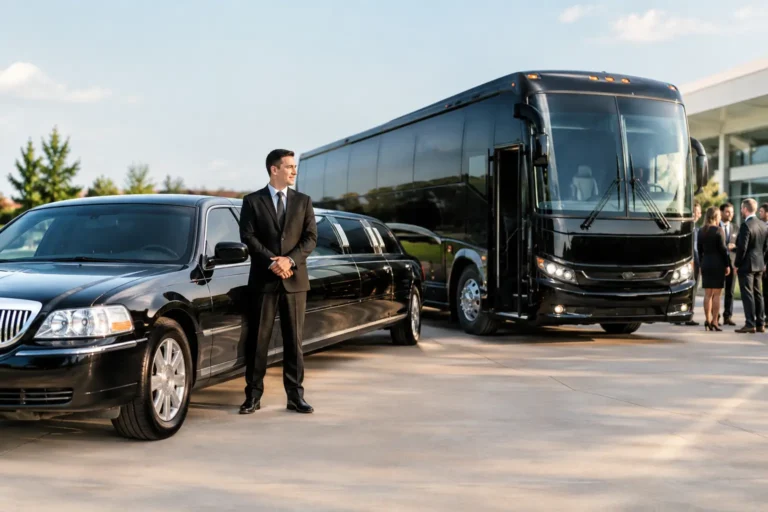
Stretch vehicles and party buses may suit celebrations, but capacity is only one consideration. Ask about access at both locations. Some venues have narrow driveways, low clearances, or restrictions on where larger vehicles can wait. A vehicle that looks right for the occasion can still create delays if it cannot safely stage at the venue.
There is also a trade-off between direct service and shared shuttle service. Private point-to-point transportation offers greater flexibility and privacy. Scheduled shuttles reduce per-person cost and can simplify large guest movements, but they require clear departure times and firm communication. Many events benefit from a combination: private service for VIPs and speakers, plus shuttles for attendees.
Plan Airport Arrivals With Extra Precision
Airport transportation needs a separate process because flights are subject to delays, early arrivals, gate changes, and baggage wait times. Collect airline, flight number, scheduled arrival time, passenger name, mobile number, and destination address for every arriving guest.
For out-of-town executives or clients, meet-and-greet service can remove uncertainty at Pearson Airport. The guest has a clear point of contact, and the chauffeur has the information needed to monitor the arrival and coordinate the pickup. This is more dependable than asking a traveller who has just landed to find a ride during a busy arrival period.
Do not schedule a critical meeting immediately after a flight lands. Allow time for deplaning, customs when applicable, baggage collection, and the drive into the city or onward to Vaughan, Markham, Mississauga, or another GTA destination. The correct buffer depends on the traveller, terminal, time of day, and whether checked bags are involved.
Create a Realistic Shuttle Schedule
A shuttle plan succeeds when guests can understand it in seconds. State the departure location, destination, first departure, final departure, and frequency. If service is continuous, define the expected interval. If it runs at set times, publish those times in advance and repeat them at the venue.
Avoid planning only for arrivals. The return trip is where transportation often becomes strained, particularly when an event ends later than expected or all guests leave at once. Estimate departure waves. Some attendees will leave early, many will depart immediately after the program, and others may remain for networking or an after-party.
If alcohol is being served, provide a clear, reliable way for guests to get home or return to their hotel. It is a service decision, but it is also a responsible planning decision. Consider whether the final shuttle departure should be flexible, especially for a private event with a variable end time.
Assign One Decision-Maker on Site
Transportation details can change quickly. A speaker may be delayed, a flight may arrive late, or a venue may ask vehicles to move. Name one event transportation coordinator who can make decisions and communicate directly with the chauffeur team.
That person should have the final itinerary, vehicle assignments, chauffeur contact process, and a list of key guests. They should also know the backup plan if a passenger misses a scheduled shuttle or if an event runs over. Too many contacts can create conflicting instructions, so keep the communication chain simple.
Confirm Pricing, Service Hours, and Change Procedures
A clear quote should explain what is included: vehicle type, service window, routing, airport pickup procedures, and any applicable waiting time, parking, tolls, or additional stops. Fixed-rate pricing is particularly valuable when organizers need to manage an event budget without surprises.
Ask how changes are handled. Passenger numbers, flight times, and venue schedules often shift in the days before an event. Know the deadline for amendments, the process for adding vehicles, and the point of contact for after-hours changes. For early-morning airport departures or late-night event service, 24/7 availability provides useful reassurance.
Book earlier when your event falls during peak wedding season, major conventions, holiday periods, or high-demand sports and entertainment dates. Availability can be affected by more than your own calendar.
Communicate the Plan Before Guests Need It
Guests should receive transportation instructions before the event, not while they are standing outside. Include pickup location, departure time, vehicle or shuttle identifier, a contact number, and a reminder to arrive a few minutes early. For hotel pickups, specify the lobby or designated entrance rather than simply naming the hotel.
For executive and VIP service, discreet communication is usually best. For larger groups, visible signage and a clearly identified event coordinator help prevent confusion. A short reminder on the day of the event can reduce no-shows and last-minute calls.
A professional chauffeur service should feel quiet from the guest’s perspective. With the schedule, passenger details, staging plan, and communication process established in advance, Fly Limousine Services can help organizers keep attention where it belongs: on the people and purpose behind the event.
The final check is simple: imagine the experience from each guest’s point of view. If they know where to be, when to be there, and who is responsible for getting them safely to the next stop, your transportation plan is doing its job.