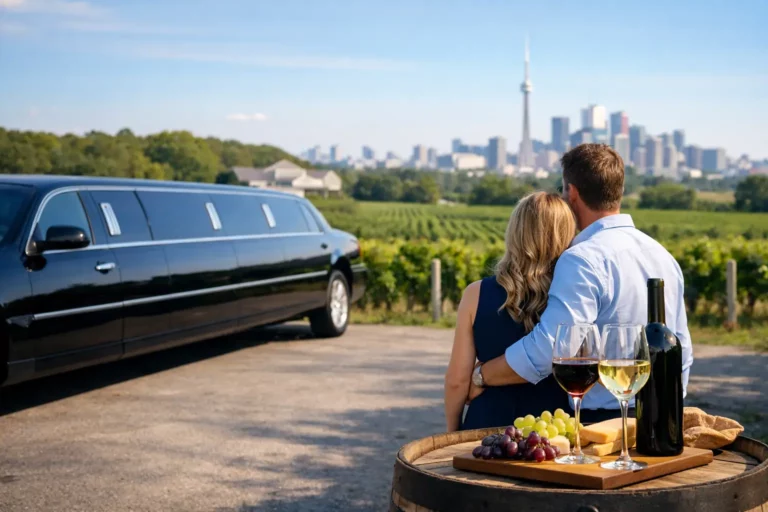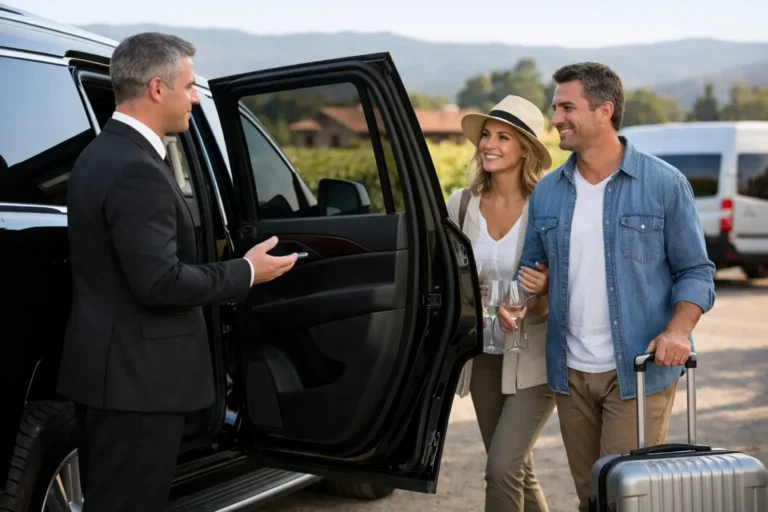
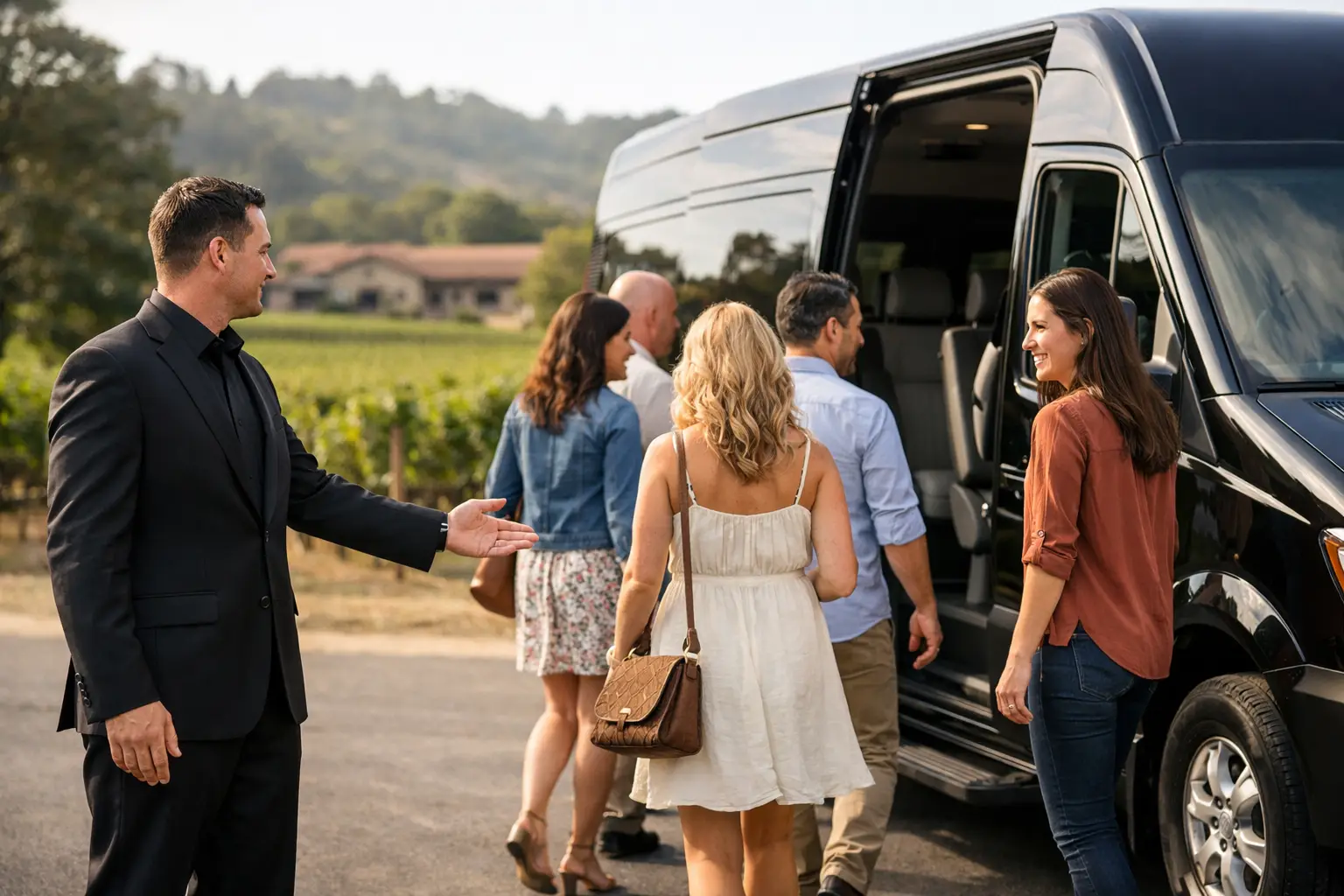
A Niagara wine tour can lose its appeal quickly when eight guests are split across cars, one driver is navigating unfamiliar roads, and a tasting reservation is missed because the group left Toronto late. This wine tour group transportation example shows how a professionally chauffeured itinerary keeps the day relaxed, punctual, and enjoyable from the first pickup to the final drop-off.
For groups, the vehicle is not simply a way to get from one winery to another. It is the place where guests gather, store purchases, review the schedule, and enjoy the drive without assigning anyone the responsibility of staying sober and alert behind the wheel. A private chauffeur also gives the organizer one clear point of contact instead of managing multiple vehicles, parking arrangements, and last-minute directions.
A Wine Tour Group Transportation Example for 10 Guests
Consider a group of 10 colleagues planning a Saturday wine tour from Vaughan to Niagara-on-the-Lake. They want a polished experience for a client appreciation outing, with three winery visits, lunch, and a return trip that does not feel rushed. The group books a luxury shuttle van with a professional chauffeur and agrees on a fixed-rate itinerary before the day begins.
The pickup is scheduled for 9:00 a.m. at one central Vaughan location. By selecting a single meeting point, the organizer avoids the delays that often come with collecting guests at several homes. If multiple pickups are necessary, they should be mapped in a logical order with realistic time between stops. A chauffeur can accommodate a planned multi-stop pickup, but an itinerary with too many detours can reduce time at the wineries.
The first winery reservation is set for 11:00 a.m. This allows for weekend traffic, a comfort stop if required, and a calm arrival rather than a hurried one. The chauffeur drops the group at the entrance, assists with any items needed for the visit, and remains available according to the agreed schedule. There is no need to search for parking or nominate a designated driver after tastings.
After the first tasting, the group travels to a second winery for a seated lunch and wine pairing. The third stop is booked for a late-afternoon tasting, with enough time between appointments for scenic travel, photographs, and a little flexibility. The return departure is scheduled for 5:30 p.m., placing the group back in Vaughan early in the evening.
This is a straightforward plan, but its value is in the detail: confirmed reservations, one appropriately sized vehicle, a known pickup time, and a chauffeur who follows the itinerary. It turns a collection of individual plans into a coordinated group outing.
Start With the Group, Not the Vehicle
The best transportation choice begins with the actual guest count, not the number of seats advertised on a vehicle. Ten guests may technically fit in a smaller option, but a wine tour often involves coats, handbags, cooler bags, and wine purchases collected throughout the day. A little additional room can make a meaningful difference on a full-day trip.
For four to six guests, a luxury SUV may offer the right balance of comfort and privacy. For eight to 14 guests, a shuttle van or executive-style vehicle is often more practical. Larger celebrations, corporate groups, or wedding parties may be better served by a shuttle bus or party bus, particularly if the itinerary includes more passengers, longer travel distances, or a social atmosphere between stops.
The right choice also depends on the purpose of the day. A corporate group may prefer a refined, quieter cabin where guests can speak comfortably. A birthday or bachelorette group may value more open space and a vehicle designed for celebration. In either case, the priority is safe, comfortable group travel with enough room for everyone and their purchases.
Account for wine purchases
Wine cases add up faster than many organizers expect. If guests are likely to buy bottles at more than one stop, mention this at booking. The transportation provider can recommend a vehicle with suitable cargo capacity and help avoid the uncomfortable situation of trying to fit bags and cases around passengers at the end of the day.
Build an Itinerary That Allows the Day to Breathe
A common mistake is scheduling four or five wineries because they look close together on a map. Winery visits are not just drive times. Guests need time to arrive, check in, taste, shop, use facilities, take photos, and move as a group. The longer the group, the more time these transitions require.
For most full-day tours from the Greater Toronto Area, three winery appointments and a lunch stop provide a comfortable pace. Two wineries may be the better choice for a shorter afternoon outing or for groups that want a longer meal. Four stops can work when reservations are tightly organized and the venues are nearby, but it leaves little margin for traffic, late arrivals, or guests who wish to browse.
Share the full schedule with the chauffeur in advance. Include winery names, reservation times, restaurant details, addresses, planned pickup points, and the preferred end time. If an itinerary changes during the tour, advise the chauffeur as early as possible. Professional transportation is flexible within reason, but changes can affect driving time, vehicle availability, and the agreed service period.
Consider traffic and seasonal conditions
Summer weekends, harvest season, holiday periods, and major events can affect travel times in and around Niagara. An experienced chauffeur plans the route with local conditions in mind, but guests should still build time into the day. Booking the first tasting too early can create unnecessary pressure, especially for a group travelling from Toronto, Markham, Richmond Hill, or surrounding communities.
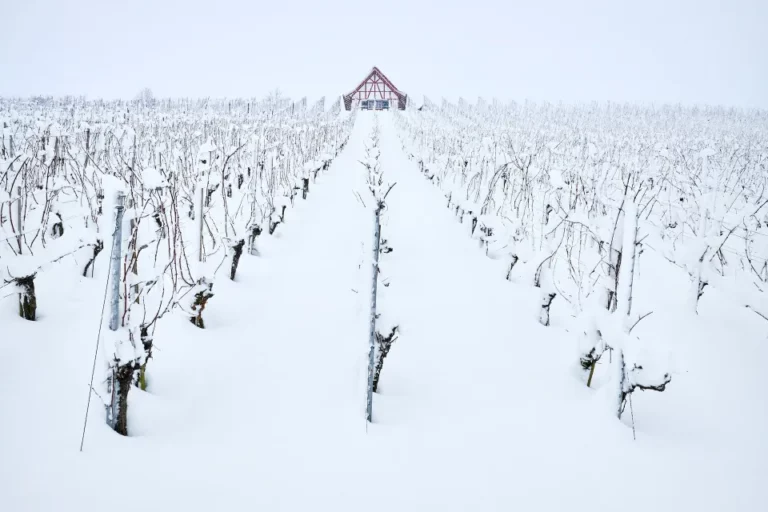
Weather matters as well. Winter wine tours can be beautiful and less crowded, yet road conditions may require extra travel time. A well-planned itinerary does not rely on every minute going perfectly.
What Professional Group Transportation Changes
The clearest benefit is responsible travel after wine tastings. No guest needs to limit their experience because they are driving, and no organizer has to monitor whether everyone has arranged a safe ride home. That assurance is particularly valuable for celebrations and corporate events where hosts are responsible for the overall guest experience.
There are practical advantages too. A pre-booked chauffeured service offers a defined vehicle, confirmed schedule, and fixed-rate pricing for the agreed itinerary. This makes budgeting easier than relying on separate rides throughout a long day, particularly when demand is high or the group is travelling outside the city.
Professional chauffeurs also bring a level of discretion that suits executive groups, clients, and private celebrations. They understand that punctuality matters, that luggage and purchases should be handled carefully, and that the vehicle should remain clean and comfortable throughout the trip. With 24/7 booking support, organizers can also plan early departures or late returns with confidence.
Fly Limousine Services can arrange wine tour transportation for groups departing from Toronto, Vaughan, and other Greater Toronto Area communities, matching the vehicle and schedule to the occasion rather than forcing every group into the same format.
Questions to Settle Before You Book
Before confirming transportation, establish the guest count, pickup location, winery reservations, expected departure time, and return destination. It is also helpful to confirm whether the group requires multiple pickups, needs space for wine purchases, or has guests with mobility considerations.
Ask how service time is calculated and what is included in the quoted fixed rate. A clear quote should reflect the vehicle, chauffeur, planned route, duration, and any scheduled wait time. If you expect the day may run longer, discuss that possibility in advance so there are no surprises.
Finally, choose one organizer to communicate changes on the day of travel. When every guest messages separately with a new idea or stop, even a well-designed itinerary can become difficult to manage. One contact keeps the schedule clear for both the group and the chauffeur.
A good wine tour should leave guests talking about the vineyards, the meal, and the company they kept, not about traffic, parking, or who had to drive. Plan the transportation with the same care as the tastings, and the whole day feels more considered from the moment the group steps aboard.